ABC Interview on
"The Spirit of Things" 25 Sept 2005
Summary The
Waiters' Union was founded as a non-formal network of
spiritually minded activists who serve the homeless
and the needy in the streets of West End in Brisbane.
Program
Transcript SONG: Jesus for Prime Minister
Rachael Kohn:
His politics are way to the Left, but Dave Andrews
believes that’s where Jesus would be.
Hello, and
welcome to the third in our three-part series, Monks,
Nuns and Waiters, Full Time Faith, 24/7. I’m Rachael
Kohn and you’re with The Spirit of Things on ABC
Radio National.
SONG
Rachael Kohn:
‘How can you worship a homeless man on Sunday and
ignore one on Monday?’ That challenge is at the
heart of an unusual community of Christians who share
their story with me today. They break with the pattern
of a formal and exclusive group, and they live the
gospel through the eyes of the poor. They’re The
Waiters’ Union, founded by Dave and Ange Andrews and
they're actually part of a wave that the Evangelical
Christian magazine, Christianity Today, calls ‘the
new monasticism’. I spoke to them in their house, in
West End, Brisbane.
Ange and
Dave, welcome to The Spirit of things.
Both: Thanks
very much.
Rachael Kohn:
Dave, the Waiters’ Union makes me thinking of an
organisation for people who wait on tables. I gather
that isn’t what the Waiters’ Union is really
about.
Dave Andrews:
Well in some ways, it is, because a lot of what we do
is create a space to welcome people and provide
hospitality. But the original idea was that the
Waiters’ Union would be a group of people living in
the neighbourhood who’d wait on God, and wait on
their neighbours, be available, helping out, living
out our spirituality in simple practical ways of
supporting people in the neighbourhood.
Rachael Kohn:
The neighbourhood is West End, Brisbane. Is it really
a need of this kind of hospitality more than other
places in Brisbane?
Dave Andrews:
Not necessarily more than other places in Brisbane. I
mean in fact West End has a great tradition of
hospitality.
At the centre
of West End is Musgrave Park, which has always been a
traditional meeting ground for indigenous people. And
then there have been lots of hostels and boarding
houses that have always welcomed people who have been
moving into the city, and in fact we’re kind of
continuing that tradition of hospitality in what we’re
doing. But what we’re trying to do is train people
to live a lifestyle of openness to other people,
support to other people so that as they learn to live
that way of life, they can go to other places around
Australia, outback, up north, or go overseas and be
involved in doing a similar kind of work with the
poorest of the poor in the slums of Asia.
Rachael Kohn:
Ange, you actually grew up here in West End, didn’t
you?
Ange Andrews:
I did and I really, really love it as well.
Rachael Kohn:
Is the kind of work you do here in West End, the place
you grew up in, at odds with the way you grew up? I
mean is it a challenge for you to be doing this kind
of work with the homeless in the very neighbourhood
that you grew up in?
Ange Andrews:
In some ways yes, and in some ways no, because my Mum
and Dad actually set a tradition in their Greek
community; they tried to live out a different way of
living in the family and in their community. And my
father did a lot of work with the homeless, and
welcoming them into his café in the city that he had,
and they always got first priority every morning,
having breakfast first, before anybody else. He’d go
and collect them all, and that’s only one of the
things that my Dad did, and my family have a strong
tradition of that.
Rachael Kohn:
Well you both spent some time in Asia, quite a bit of
time in India. That was in the ‘70s. Was it part of
the sort of hippie move towards India to find
inspiration?
Dave Andrews:
In those days, people said orientation is where the
Orient is, so if you really want to get orientated to
the world, you needed to go to the Orient. And we made
it our pilgrimage too.
We first went
to Afghanistan and then we caught up in the civil war
there and had to leave and found ourselves in India,
and we lived in India for 12, 13 years, and we were
part of an intentional community there that was
dedicated to following the way of Christ, but operated
not as a Christian community but a community of people
from various traditions and religions, including
Christian, Hindu, Muslim, Buddhist, Jain, Sikh, and
together we tried to ask the question, What does the
radical compassion of Christ say to us as a group of
people from these different traditions and religions?
How can we respond to the challenge that he fleshed
out in his life? What would it mean for us to try to
not just be familiar with his teachings but actually
flesh out his teachings in our own life?
Rachael Kohn:
Dave, weren’t you the son of a Baptist pastor? Why
didn’t you follow the way of Christ in the Baptist
church?
Dave Andrews:
I am the son of a Baptist pastor, and I derived from
my parents a legacy in the faith which I’m
profoundly grateful for. And like Ange’s parents, my
Mum and Dad lived out their faith in a way that was
very open and compassionate, and had a huge impact on
us. But I think that when we went to India, we
realised that the Christians had no monopoly on
Christ, or Christlikeness, that in fact the more
dedicated we were to living out the way of Christ, the
more we recognised Christ-likeness in other traditions
and religions, and found ourselves in a position where
we needed to learn from our Buddhist and Hindu and
Muslim friends about what it meant for us to become
more Christ-like.
Ange Andrews:
It’s not only in religious traditions, but people
that don’t say that they have a religious tradition
that we can learn so much and be challenged by in
terms of being more authentic in our own belief.
Rachael Kohn:
What were the sort of things that you were involved
in, in India? I mean you were actually there at the
time when Indira Gandhi was assassinated; did you find
yourself in the midst of that conflict.
Ange Andrews:
Yes, we were in the middle of it. In fact last night I
had a big debate with my daughter and another young
girl that was part of that whole thing when she was a
child, and last night they wanted to discuss that very
issue, what happened then, and why did we intervene,
and why did we take a Sikh into our home and hide the
guy in our home? And they couldn’t understand why we
would be jeopardising their situation of safety.
Then Dave and
that girl’s father went out to try and stand between
the Sikhs that were being harmed by the people that
were reacting and trying to kill them, and they were
just talking last night about how they thought that
that was madness because they were children, and they
didn’t want to actually have their parents die and I
didn’t want Dave to go either.
Dave Andrews:
And I remember that conversation; they were saying to
Ange, ‘Look, we looked out the window and mobs of
people were chasing down Sikhs because a Sikh had
killed the Prime Minister, and people were in the
backlash, slaughter the Sikhs. But I said, ‘If it
was your father, or your husband, or your son, wouldn’t
you want somebody to intervene?’ And I can remember
at the time Ange said, ‘Yes, of course I would.’
The framework for a global ethic is recognising we’re
all part of the same family, and realising that we’ve
got that responsibility. Am I my brother’s keeper?
Yes, I am, because I’m part of the same family, and
that was an impulse to respond, to intervene, and to
save some people’s lives. And that was I think
highly significant.
Rachael Kohn:
I guess it raises the question of the demands of this
kind of life and this kind of work on the family.
Where the radical compassion is directed. If it’s
directed outside of the family, does the family
suffer? What kind of a challenge was it for you, to
maintain a family life that’s stable and that
survives?
Ange Andrews:
That’s a big question, because I was saying to Dave
this morning that I was painfully aware of the
complexity of raising normal children within abnormal
environments, but I think that now, in our society, it’s
very complex, and that we need to teach the children
not to be unaware of the issues as well. And to know
how to actually work within society and address very
difficult problems.
So there’s
this big tension between me being completely devoted
to help in every possible way, but at the same time
being totally aware of the fact that I wish the same
thing for other people and I know it’s nothing like
that for most people in the world. So I’ve actually
tried to walk a tightrope between those two
polarities.
Dave Andrews:
But I think there was something that was very
important for Ange and I was to recognise that if we
were committed to love and justice, we had to start
with our kids, and work it out with our kids. And give
our kids a sense that the revolution begins with them,
in our care for them. So that rather than sacrificing
them for the sake of the cause, we said ‘The most
beautiful thing that we could pass on to you is the
way that we live our lives.’ And so what we want to
do is model that with you in the way that we care for
you, and then show you how to do that for others.
Rachael Kohn:
Well you obviously returned from India to West End,
Brisbane, eventually did set up the Waiters’ Union,
to continue the kind of work you had done in India?
Dave Andrews:
We came back and we set up the Waiters’ Union. We
tried to do it in a way that reflected a global
commitment, with a concern for a whole range of people
of different traditions and religions, with a
commitment to justice, struggle for change, and with a
concern to actually flesh that out in our own
neighbourhood here and our own backyard, and to train
people on how to work with disadvantaged groups, so
that they could do that here, but also they’ll be
able to go to overseas and do it as well.
Rachael Kohn:
Give me an idea of the kind of projects that you’ve
undertaken.
Dave Andrews:
OK. When we arrived here, we decided that rather than
set up a welfare agency working for people, so that we’d
become professionals and they would become clients,
that in fact we needed to develop a community network
that would include people, and treat people as our
friends. So we’ve developed networks of
relationships in which we’ve tried to develop a
culture of trust, so that the struggles that people
have, that they carry deep down, they have confidence
to raise to the surface, and we can talk about them.
And we’ve tried to join with them around those
issues of struggles.
And so we
tried to join in with local Aboriginal people around
issues of struggles that they have, around stolen
wages, and tried to join with refugees who arrive here
and who are often not welcomed, and we’ve tried to
provide places of welcome for them, and supports for
them.
Our
son-in-law actually runs a workers’ co-operative
that generates employment for refugees, and Ange has
got a lot of involvement with refugees, providing
supports and resources for them, and we also work with
people with physical, intellectual and psychiatric
disabilities in hostels and boarding houses around the
neighbourhood, doing everything from support groups to
peer counselling, to crisis intervention and help.
Rachael Kohn:
How do you support your work? I mean it’s great to
be doing this but how do you support it? Where do you
get your crust?
Ange Andrews:
I’m actually hired by the Baptist Union of
Queensland to do some work to set up certain projects
within our local community, so that’s enough just to
cover our costs and then the rest of it is all
voluntary and with a lot of other volunteers.
My whole
approach is people from all professions coming forward
and giving some time, not unlimited time, but some
time towards addressing a certain issue in their
community in Brisbane, or in our local community here.
And I do a lot of linking, so I would say the way that
we do it is thousands and thousands of dollars worth
of time, energy and resources, comes from those
people, and we could never do what we’re doing
without all those people.
Rachael Kohn:
Ange, in what way have you been involved personally
with people who have real difficulty living and making
friends and keeping a job. How does it involve you
personally?
Ange Andrews:
I mean my approach is having a one-to-one contact with
people and welcoming them into my home and into my
personal space, trying to really be out of the
friendship and seeing things grow in people, let the
problems emerge that they’re facing and then try to
address those as best I can, and walking alongside
them, not as somebody that is over them, and then also
drawing in a lot of other interested, good people out
there in the community that can be part of that, and
sort of alleviating their suffering.
There’s one
woman that I’ve been involved with for the last
three years; it was a case of being a homeless person
that lived in the city, she became my neighbour just
down the road. I got involved with her, and then my
daughter and her girlfriends were involved with her
also.
Rachael Kohn:
What sort of problems is she coping with?
Ange Andrews:
At the time in the beginning she was having problems
even bathing, so we used to go down and bath her and
dress her and help her to find appropriate clothing
and stuff like that, because she didn’t have
clothing, helping with meal preparation, or inviting
her for meals, and then gradually I included a whole
range of uni students who said that they were
interested in getting involved, to become friends and
have continued to be friends. And so the network has
grown and that’s just one example of many young
women that I’ve been involved with over many years,
doing the same sort of thing.
Rachael Kohn:
Ange and Dave Andrews are the founders of The Waiters’
Union. It’s a non-formal community network of people
who live the gospel 24/7, located in West End,
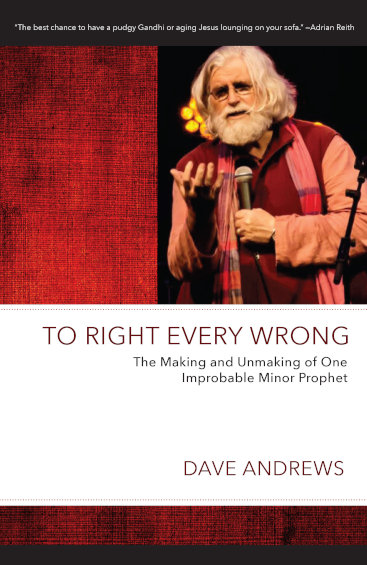
Brisbane. Dave Andrews has written Christi-Anarchy:
Discovering a Radical Spirituality of Compassion with
a foreword by Tim Costello.
SONG
I’ll return
to Ange and Dave Andrews a little later. In the
meantime, here are some of the people from around
Australia who came to Brisbane to learn from members
of the Waiters’ Union, and to experience the Sunday
night service that Dave Andrews leads in the local
Anglican church.
Dave Andrews:
(preaching) Don’t you reckon that’s a great
picture of God? A God who is a good listener, a gentle
counsellor, a God who’s a courageous campaigner for
love and justice. Now that’s a God I can relate to.
And that’s the kind of God that Jesus shows God to
be. In fact as the Archbishop of Canterbury once said,
‘God is Christlike, and in God is no un-Christlike
thing at all. If you want to know what God is like, we
need to look at Jesus Christ.
Yvonne: I’m
Yvonne from West End.
Kate: I’m
Kate from Melbourne.
Gillian: I’m
Gillian from the Adelaide Hills.
Neil: And I’m
Neil from Highgate Hill.
Rachael Kohn:
I think it would be great to hear from each of you
what sort of area you’re working in. And what’s
brought you to this course?
Yvonne: I’m
actually living in West End and I’ve been here for
the last 20 years. I’ve grown up in the community in
West End. I’m more involved with facilitating people
in coming in to the area. and helping people feel at
home and connected in an ongoing way, supporting
Bristol Street, people who live at the Bristol Street
community house, a group of young people who are
coming to live and explore their faith, and they have
cheap rent, which is about $35 a week which subsidises
them. Instead of working full-time they can work
part-time, or study part-time, and explore living in
community. So I have a big commitment to them, and I’m
studying out there a bit at the moment in which I’d
like to be able to use that more in the community.
Kate: I’m
Kate, and I’m involved with Urban Seed, which is an
inner-city faith-based mission organisation in
Melbourne. I’m part of what we call a residential
program there. There’s four people who live in the
building, have a presence there and are very involved
with the work that Urban Seed does. That’s primarily
a couple of things. We run an open lunch every day out
of the basement of the building, and that feeds around
about 60 people who struggle with various issues like
homelessness, unemployment, mental illness, various
kinds of addiction.
Gillian:
Hello, I’m Gillian and I live in the Adelaide Hills
in South Australia, and I’ve been involved for the
last eight years with marginalised people in that
district, partly through people in the prison, and
then when they come out, helping them get established,
and also through the church that I belong to.
We have a
free meal every Sunday night but we try and have as
our prime concern, relationship building rather than
just feeding, so we have a nice two-course meal and we
try and serve people in a way that perhaps just you
and I might get served by our Mum or somebody special.
Many people have nobody who’s special, who they are
special to.
And the other
thing it’s very associated with faith from my
perspective in that am I understanding the questions
that I’ve had over the years that many of the things
that churches have been doing to so-called help
people, haven’t really worked, because the
foundational problem is a lack of love and a lack of
relationship. And so I guess one of the reasons I’ve
come here is because from what I’ve heard from Dave
and also from what I’ve read, many of the things in
this community are being done that we would like to
develop and pursue in Mount Barker or in the Hills in
Adelaide.
Neil: Hi
Rachael, I’m Neil, I live in the inner city of
Brisbane, and my main work that I’ve involved in
currently is in mental health community work. I’m
involved in organising a small agency called A Place
to Belong, which works Brisbane-wide, and we’re
seeking to respond to the belonging needs of people
with mental health challenges.
We work with
isolated people who ask us to get involved with them,
to help them rebuild a sense of connectedness with
others in their locality or in their neighbourhood,
and I guess we’re seeking to provide another option
other than the biomedical model which is a lot of what
our services are providing in mental health. We’re
saying that belonging and relationship and friendship
and acceptance and respect are critically important in
mental health. So that’s one of the main areas I’m
involved in in my community work.
Rachael Kohn:
Churches have always been involved in community work,
and charity work. In what way would you identify what’s
going on here as distinct, as unique, as something
else that you’re looking for?
Gillian: Well
I think the important thing is that Christianity, I
think churches are just realising that Christianity is
a whole of life thing, it’s not just a religious
thing, and that our wholeness of human beings involves
every part of our life, so it’s as much of caring
for your neighbour for example, as what it is having a
soup kitchen in the back of your church once a week,
and maybe even more so, because then you may not need
the soup kitchen in the long run, if people do feel
loved and cared for, and have a sense of belonging and
a sense of self-respect and all of those sorts of
things that human beings really need to be whole.
Rachael Kohn:
Is it important for any of you in your work to convey
the message of the gospels? Are you in any way
committed to evangelising, or not?
Yvonne: What’s
more important to me is the spirit of who I am and
what I share with other people, and that I’m not
there to evangelise others or there with a big agenda.
It’s rather that they do feel the spirit that I have
or that I feel with God. And that I am able to create
a space that is safe and that is ongoing in order to
help them feel that sense.
Kate:
Sometimes the people who are perhaps the most
marginalised or disadvantaged, are also the most
evangelised. Every religious person with an agenda
targets, often will target those sorts of people, and
we find that a lot with people who come in to the
lunch that we run. So I think I concur with Yvonne,
that just being authentically who you are and seeking
to meet people where they are, and following the
example of Christ in that is often a lot more powerful
than words.
Neil: My
response to that question Rachael is really developed
over the years. I guess I’ve been on a long journey
of over 20, 30 years trying to work out what does my
mission mean. What’s the mandate that I’m seeking
to respond to. And my journey I guess has been very
much about I still have a mission, I still have a
sense of mandate, I still have a sense of purpose in
what I’m doing. But the transition for me over the
years has been moving from having a very verbal
involvement with people, a very theoretical
involvement in terms of theorising about faith, about
spirituality, or verbalising or talking about faith,
and seeking to call people to a conceptual response to
Christianity.
I’ve moved
from that kind of polarity to a polarity more of I
guess a deeper engagement with people around issues in
my and their lives, a much more mutual involvement,
still coming with a sense of mission and a sense of
passion and a sense of compassion and still seeking to
respond to the spirit of the Christ who I believe in,
and still may be involving lots of verbal
conversation, but I guess a far deeper engagement
around the fundamental issues in people’s lives.
And so
working and seeking for change, not just in their
lives, but in my life as well; not just in their
thinking, but in my thinking as well. And working for
change in live, not just in terms of theology or
doctrine. So I think for me, the mission I’m engaged
with is I guess much more about changing me as well as
others, much more about a mutual engagement with
people and much more around life issues rather than a
simple detached kind of verbal conversation with you.
Rachael Kohn:
Well you’ve just raised a wonderful point, and that
is, how has your work affected you as Kate said,
people who are marginalised are often evangelised and
they are the focus always, but it is a two-way
relationship. How important is the work that you do
for you yourself, for your own spirituality?
Neil: Someone
once said, Rachael, that what you see depends on where
you stand, and what you hear depends on who you listen
to. And I think that’s very true of what we’re
trying to say in the course here. And what we’re
doing here is we’re seeking to engage with people
and live with people and learn with people, and that’s
a very personally changing thing as well.
It’s a
challenge for us, it’s a challenge for me, and I
know my view of salvation over the years has I guess
deepened from bringing a message of salvation for
others to more a perspective of I need saving too, I
need help too. We need to work out what salvation
means for us collectively, and in our societies we’re
coping with enormous fractures and enormous challenges
and problems, and I’m part of the problem, and we
need to search for the solution together as well.
So I find
that a very personally challenging thing, so rather
than coming from a comfortable position of telling
others something, I’m coming with a sense of how can
we work this out together. And yes, that’s quite
challenging for me.
Kate: It
seems Neil, that you’ve just articulated perhaps a
journey that I’m just beginning, but I have to say
that in the last six months I’ve become more acutely
aware of my own relational handicaps and weaknesses,
and less than ever feel that I’m in a position to
deliver some kind of top-down message or to go and
help people.
Rachael Kohn:
Can I ask you to give me an example of the kind of
situation, or type of person that you find really
difficult, that is really hard to relate to, that is
hard to bring out the best in you?
Gillian: Yes,
I’ve found definitely that it’s crucial really for
all of us that from a spiritual perspective it’s
very easy to be very plastic spiritually when we don’t
have to engage with people. But I’ve had many
problems in my life, but mental health issues is not
one of them, and when I’ve had a couple of friends,
one in particular, that really struggled, then I found
that many of the worst aspects of me came out, but at
the same time, when I could really get to know my
friend, there’s a real respect. So even though I’ve
had to deal with many issues, you start to see from
the other side, the other perspective, and I think it’s
been good for both of us to do with that.
Rachael Kohn:
In doing this really difficult work, do you have a
mentor, do you look to somebody who gives you
strength? Is it Christ, is it St Francis, is it
someone you know?
Gillian: I
certainly find that I have to keep very well connected
to my God, to the Lord and to Jesus, otherwise I can’t
do it. But it’s a very humbling thing also, because
I’m increasingly aware of how little I can do myself
in one way, and so when I both try and become more
Christlike, but of course that’s very difficult, but
also look to Christ always for myself, then I find
that I’m actually of more use to people, that’s a
better way of putting it, or I can connect with people
more effectively when I do that.
But when I
first started this work, or I guess befriending some
people like this, I became overwhelmed far too often
and feeling as though it was all on my shoulders, that
I had to be able to help people but I’ve pulled back
from that completely and realising that it’s just a
journey, it’s a life, it’s living and connecting
with people, and being in a relationship and loving
and caring for people and all those sorts of things as
well as the other way round as well.
Yvonne: My
experience of my faith seems so far away from all you
guys because I feel like my faith was founded in
India, in a context of many religions, and I didn’t
grow up in a mainstream church, so reaching out to the
other has mainly been from the poor reaching out to
me, and giving me their last bit of milk when that’s
all they have, and being the most generous, and that’s
my role model. That’s the impetus for my life, is to
embody the characteristics of people who are suffering
the most. Yes, I just feel like that’s what I’m
trying to move towards, is the unbelievable joy and
generosity that people have when they’re suffering,
the total relishing you have when you only have a
little.
Neil: It’s
a good question, Rachael, there’s no doubt I’ve
got many, many mentors. I think it’s good to draw
from many places, certainly for me, a central figure
in terms of a spiritual mentor for me would be the
work and the life and teaching of Jesus, and I still
draw from that, including from the lives of people in
the early church, and he wrote in the letters and in
the New Testament about some of the radical struggles
they were going through , and working out how they
could live together and love each other and I draw
from the kind of lessons that have been recorded there
for us.
But I’m
continually reading and spending time with different
people who mentor me and help me in various ways,
whether people I read about in books or local people,
and as Vonny mentioned, people in our local community
who are often devalued in our society, but who I think
rather than being seen as problems can be real
prophets for us, and so I draw from some local little
prophets who by their resilience and the fact that
they stay alive, day by day, I learn to admire their
fortitude and bravery that some keep living through
the kind of challenges that they encounter and live
with continually, which are far greater and tougher
than some of the challenges I face. So yes, I have
many mentors.
Rachael Kohn:
Well in all of this do you describe yourselves as
Christian or as a Baptist, or as an Anglican, Uniting
Church, how would you describe yourselves?
Yvonne: I
would describe myself as a follower of Christ, and I
have been impacted a lot by Catholicism, and Baptist
and Evangelical, but I don’t really understand what
that all means, but I really feel like I’ve
identified with Christ from a young age, and that’s
who I’m following.
Kate:
Although I grew up in the Anglican church, I don’t
really understand enough, the differences between the
denominations to know where I’d identify myself, but
I’ve also drawn from different traditions in my
reading and in my experiences.
Rachael Kohn:
Would you say you’re a Christian?
Kate: Yes,
absolutely, in the sense that I’m a follower of
Jesus and is there anything more on that?
Gillian: I
didn’t grow up in the church but I did come to faith
I suppose as a Christian in my early 20s, and I’m
now part of the Uniting Church in Mount Barker, not
for any reason other than just that’s where I happen
to be, I believe in all the different denominations
and organisations have much to contribute.
Neil: Yes my
faith journey I’ve drawn from a range of places. I’ve
drawn heavily from para-church organisations, youth
work organisations, and the Anglican church where I’m
worshipping at the moment in my local area. I define
myself fundamentally as a follower of Christ.
Rachael Kohn:
Some of the mission workers who in various ways serve
the homeless and the needy in their cities around
Australia. I’m Rachael Kohn and this is the third in
a three-part series about religious communities.
SONG:
Kindness
Rachael Kohn:
Religious communities come in different forms, but The
Waiters’ Union in Brisbane doesn’t rely on monks,
nuns, priests or bishops to do its work, helping those
in need. Dave and Ange Andrews find their faith
expressed in simpler terms, as in this song, sung by
Dave.
SONG:
Kindness
Dave Andrews:
I think for me the challenge is to live hope in the
midst of despair because I think given the current
global realities where there’s so much terrible
violence and warfare and disregard for the rights of
people and in our country such a disregard for
refugees and indigenous people, the challenge is to
try and find hope in the midst of despair because I
think unless we find hope in the midst of despair, we
can’t sustain the struggle, we can’t feel
completely and utterly hopeless and continue to engage
in change.
One of my
disciplines is to every day make time to be open to
the reality of God and God’s love, to actually allow
myself to be immersed in that love and to be renewed
in that love, so that out of the overflow of that, I
can engage with hope and compassion in a world where
otherwise I’d feel quite hopeless about making any
significant contribution at all, so for me at the
heart of the process of all this kind of activity that
we do in the neighbourhood is the secret, quite,
private place of an exponential experience, of the
love of God.
I believe
that part of the universe is the heart of God, and the
heart of God is the heart of love, and that unless I
continually experience a renewed, an awareness of
that, not just in terms of theological categories but
in terms of my own personal experience, that I will
not have the energy to continue to engage. I think it’s
very interesting that the word ‘enthusiasm’ comes
from enthios, or ‘being in God’, and so both
Annie, Ange and I try to find ways of experiencing
something of the vitality, the energy, the enthusiasm
that comes with that continued encounter with God.
Ange: I think
as Dave was talking I thought of the refugees and they
speak to me in a thousand ways about God, by their
example, by their suffering, and by the dignified way
in which they have addressed enormous hurdles that
they have had to cope with, and become able to sort of
get through, to be hopeful, they’re having their
dances, they’re having their community gatherings,
they’re having their celebrations, they are actually
encouraging each other towards a new future and to me
that’s inspiration, and they have come through the
worst of it.
And I feel
challenged by that all the time, and draws for me
spiritual awakening that’s ongoing and also that I
do a lot of reading around a lot of themes especially
to do with the spirit, what the name of your program
is, which is The Spirit of Things, because to me,
without all these things that maybe we might immerse
ourselves in, are nothing without the spirit of it.
They have no
meaning unless it comes from a really good place that’s
actually growing inside us, and growing inside other
people, and it sort of awakens something in them too,
you know. And in terms of my children, I also feel
like I’m trying to live in a way that’s meaningful
to them on a daily basis that they can feel sense,
understand and sort of gather some momentum for
themselves about a vision for their lives and what
they’d like to do.
Rachael Kohn:
I gather it’s pretty important for The Waiters’
Union not to be out there and advertising itself, but
working more behind the scenes. It’s more the action
and not promoting the Waiters’ Union itself. Can you
tell me how the Waiters’ Union is organised and how
many people are involved?
Dave Andrews:
I think the whole name Waiters, gives the idea of
people in the background just being available, trying
to help out and that’s part of what we’re on
about.
I think what
we want to do is be a catalyst for change, which means
that you have a kind of secret influence that has some
kind of effect but that’s not prominent, it’s not
high profile, it’s actually quite low profile,
because a catalyst can affect something to the degree
that it’s mixed up in the situation in which it’s
located.
So the
Waiters is actually a network of about 10, 15
households in this area of people who develop
relationships with neighbours in general, but more
disadvantaged neighbours in particular. And in the
context of those relationships tries to join people
around issues they’re struggling with.
Often in that
struggle, those people will actually form groups so a
pay-the-rent group to actually pay the rent to
traditional owners, or they’ll form a group like the
West End Refugee Support Group that Ange is involved
with, or they’ll join, developed groups to provide
literacy and numeracy training for people that have
intellectual disabilities in the hostels. The thing
about every group that people in the Waiters start, is
that that group is named, managed and organised by the
people themselves, it doesn’t bear the Waiter’s
name. The Waiters is just the name of the network.
Every
activity in this community that we’ve generated is
not run under our name because the whole idea is to be
part of an empowering process rather than an
overpowering one. It’s mean to be in stark contrast
to religious imperialism that tries to control people.
It’s the whole idea of coming alongside people,
encouraging them, supporting them, helping them to
develop groups and projects that actually serve their
interests and their needs, and we collaborate in that
process.
Rachael Kohn:
How committed are the other members, the other houses?
Is it a kind of formal commitment? How do you keep
that going?
Dave Andrews:
Well there are different ways at different communities
actually keep commitments going. Traditionally in
Australia intentional Christian communities have had
very clear covenants, and everybody’s had to make
these commitments. The difficulty with that is that
you actually exclude a lot of the people that we want
to include.
We want to
include people who cannot say that they’re
Christian, because they’re not. Or even if they’d
like to be, don’t really understand what it’s
about, because of the intellectual or psychiatric
disabilities, and so if we actually give those as
requirements, we actually exclude those very people
that we want to include. So we have no criteria.
We actually
have no rules or regulations that people have to
subscribe to, to become members of the Waiters’
Union, people become a part of the network by
participating in it. And so we’ll discover the
people in the Waiters’ Union that we never knew were
a part of it, but they think they’re a part of it,
and so they are a part of it, and that’s great. That’s
what matters, and it’s like Angie’s saying, that
she gets involved with people and then she invites
other people to get involved alongside her and they
get involved and they invite other people to get
involved in this whole lot of energy and activity
around it that’s not centrally organised, and not
centrally controlled, but it’s kind of like this
thing that’s just kind of happening.
Ange
Andrews: It’s a fluid thing, and I know that so many
times when I’m running something like a say for
instance the sewing group –
Dave Andrews:
This is the sewing group for refugee women.
Ange Andrews:
- which has been going for 15 years now, with waves of
refugees coming through there, and with really good
volunteers that come from all over the place, the
women say to me, the ones that are volunteering, they
say sometimes, ‘Angie what is the Waiters’ Union?’
And I said, Like I’ve never told you about the
Waiters’ Union because it’s actually about all of
us, the stuff we’re actually doing in the community
without a name, even though the name has a place. But
they said, We feel a part of that, so how does that
happen?
Well that’s
the whole point, like it’s actually about generating
an attitude, a certain kind of mentality within people
over a period of time, participating in a whole range
of different activities that actually draw those kinds
of values out, that we’re trying to promote within
the Waiters.
Rachael Kohn:
Dave and Ange in all of this I’m struggling to get
an idea of who Christ is for you, and what living out
his life means, because for a lot of people it’s the
church, but here we are in your house and you’re
talking about houses and you’re talking about
networks of people who are not necessarily Christian.
So who is this Christ who inspires you?
Dave Andrews:
I believe that Christ is God come among us to show us
how to live much more authentic human lives, and
Christ himself didn’t come to start a new religion.
He said, ‘I am come to bring life, to enhance life’,
so I believe the way of Christ is a way of affirming
all that is truly life-giving in all traditions and
religions and cultures. And so what we try to do as a
network, if I was to define who we are and how we
operate, I’d say we’re a network of people living
in the locality, trying to develop a sense of
community with all p0eople, particularly6 the most
marginalised, to reflect the love of Christ.
Now in that
definition, it’s really clear that though we are
trying to live out a Christlike life, we’re not a
Christian community, and we’re deliberately not a
Christian community because we want to be a Christlike
community, that transcends the Christian non-Christian
divide.
To be truly
committed to the way of Christ I believe means
transcending your own religious preoccupations and
prejudices to relate to all people in a Christlike
way. I mean Christians often forget that when Jesus
was trying to talk to people about true spirituality,
he told the Jews about a heretic like the Good
Samaritan, he was holding up an example of somebody
that they would not have recognised as one of their
own, as an example of the way that they were all to
live and so we are trying to develop a way of life
together that helps people develop the humility to
learn from everybody how we can live a much more
authentic human life.
Now we try to
live that out in a way that we believe is truly
spiritual, but we don’t believe that the spiritual
is necessarily religious. We believe that the
spiritual is anything lived out that reflects the
radical compassion of Christ regardless of the nature
of the activity, whether it’s religious or not, so
it’s the way Ange and I relate to each other, it’s
the way we relate to our kids, it’s the way we
relate to our neighbours, relate to strangers, it’s
the way we relate to our friends, but it’s also the
way we relate to our enemies. It’s all about a
spirituality that shapes our responses to the world
around about us.
Rachael Kohn:
And is that reflected in the Sunday evening service at
St Andrews?
Dave Andrews:
We believe that it’s reflected in a whole range of
ways. I mean we gather every Monday morning for
prayer, and we find out information, issues happening
in the neighbourhood and we try to respond to those,
we have men’s groups that get together and women’s
groups that get together to nurture that kind of
spirit, but we also found that people would like to
gather in a large group, and we’ve been able to talk
with the people in St Andrew’s Anglican church,
about meeting in the basement there and so together,
in collaboration with that local church, we’ve tried
to develop a service there that’s a place of welcome
for some of the most marginalised people in our
neighbourhood.
SONG: Jesus
is on the Main LIne
Rachael Kohn:
The congregation really gets into the swing of it,
with Dave Andrews on Sunday Night in the St Andrew’s
Anglican Church in West End, Brisbane.
Well I hope
you enjoyed the Waiters’ Union, the final in our
series ,I>Monks, Nuns and Waiters, Full Time Faith,
24/7.
Production
was by me and Geoff Wood and technical know-how was
provided by Michelle Goldsworthy.
Next week,
the return of Meister Eckhart. A mediaeval mystic
makes a comeback with the founding of the Meister
Eckhart Society in Australia. That’s the Return of
Meister Eckhart on The Spirit of Things, with me,
Rachael Kohn.
SINGING
Publications:
Not Religion, But Love: Practising a Radical
Spirituality of Compassion Author: Dave Andrews
Publisher: Lion Publishing, 2001 Christi-Anarchy:
Discovering a Radical Spirituality of Compassion
Author: Dave Andrews Publisher: Tafina Press, 1999