Home Bio's Intro's Details Interviews Publications Songs Links


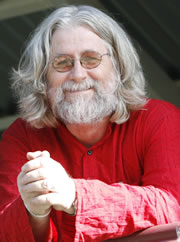
"I like to think of Dave Andrews as a... weirdy, beardy, proverbially wise-old, kind-old, be-slippered, fire-sided, snoozy, fearless, story-telling, grand-fatherly, rugged, tribal-leader.'  

Martin Wroe - Greenbelt


More Information:

· wecan.be
· Waiters Union
· Waiters Union Training Options
· Compassionate Community Work Course 
Compassionate Community Work Course...

Introduction to Compassionate Community Work

Compassionate Community Work Articles

Compassionate Community Work Stories

Compassionate Community Work DVD


Compassionate Community Work Stories

Most of us struggle to be the very best we can be. And for many of us, Jesus Christ of Nazareth represents the very best that we can be.

It might be too much for any of us to expect to be Christlike in terms of our ability. Very few, if any, could ever calm a storm, or raise the dead, like Christ did. But it’s not too much for any of us to expect to be more Christlike in terms of our sensibility. Now, more than ever, we need to learn to care for people like Christ did.

Fortunately, the path of Christlike compassion is one that others have trodden before us; and there are men and women in the past whose lives can serve as examples of the way we need to take in the future.

I don't think that it helps us to treat anyone as if they're saints. To hold people up as models of sinless perfection, when they're not, doesn't help them, or us. Haloes only serve to create delusions of grandeur that become reasons for discouragement when disillusionment eventually sets in.

The relevance of the example of people who have gone before us, depends on our remembering them and reconsidering them as they were -imperfect people in relentless pursuit of the practice of perfect compassion. 

I would like to acknowledge that these stories first saw the light of day in Target magazine, a publication of Tear Australia, a Christian aid agency.

In telling these stories I have tried to be accurate. But because they are sketches - outlines, not portraits - a lot of details are missing. To get a full picture you need to read their biographies and autobiographies yourself!

Dave Andrews,

Brisbane, Australia


Stories

Telemachus - ‘The Mad Monk’ (4thC)

John Chrysostom - ‘The Man With The Golden Mouth’ (347-407)

Wenceslaus - ‘The Good King’ (903-935)

Hugh – ‘The Hammer of Kings’ (1140-1200)

Francis of Assissi – ‘God’s Juggler’(1182-1226)

Elisabeth von Thuringia – ‘The Queen Who Served Beggars’ (1207-1231)

Menno Simons  - The Architect Of A Pacifist Church (1496-1561)

Nikolaus Ludwig – ‘The Count Who Cared’ (1700-1760)

John Wesley – ‘The Whole World Is My Parish’(1703-1791)

Charles Finney – ‘Christ’s Lawyer’ (1792-1875) 

Sojourner Truth  - ‘Ain’t I A Woman!’ (1797-1853)

Caroline Chisholm – ‘The Tireless Campaigner (1808-1877)

Florence Nightingale  -‘The Lady With The Lamp’(1820-1910)

Joseph De Vuester – ‘Damien The Leper’(1840-1899)  

Henri Dunant - “Founder Of The Red Cross’ (1828-1910)

Mary MacKillop –‘The Little Battler’ (1842-1909)

Pandita Ramabai – ‘The Learned One’(1858-1922)

Charles Freer Andrews – ‘Christ’s Faithful Apostle’ (1871-1940)

Helen Keller – ‘The Light In The Darkness’. (1880-1968) 

Toyohiko Kagawa –‘The Faithful Traitor’ (1888-1960)

Albert Luthuli – ‘The Apartheid Opponent’ (1898- 1967)  

Dorothy Day - The Woman Who Wanted To Change The World (1897-1980)

Dietrich Bonhoeffer –‘The Man Who Stood By God’ (1906-1945)

Simone Weil – ‘The Red Virgin’(1909-1943)

Helder Camara  -‘The Red Bishop’(1909-1999)

Clarence Jordan – ‘The Race-Mixing Communist.(1912-1969)

Jose Maria Anznediarretia – ‘The Coop Priest (1915-1976)

Desmond Tutu- ‘The Voice Of The Voiceless’ (1931-


Telemachus – ‘The Mad Monk.’

Telemachus was born sometime in the fourth century after the birth of Christ. He lived as a monk in a remote Asiatic Christian community, growing  vegetables and studying prayer. Then one day, in prayer, Telemachus sensed that the Spirit was encouraging him to leave his community and go to Rome, which at that time, was like the capital of the world, a big bustling metropolis at the centre of the greatest empire the world had ever known.

When Telemachus arrived in the so-called ‘heavenly city’, Rome was celebrating a recent victory of its powerful legions over the troublesome Goths, and so, for the holiday festival, a circus was being staged for the jubilant multitudes.

Telemachus didn’t know where he was going. But he allowed himself to be swept along by the crowds on their way to the Coliseum for the circus. When the crowds arrived at the Coliseum they began to get excited at the sound of the lions roaring their challenge and the gladiators preparing for combat.

Telemachus didn’t know what he was doing. But he followed the crowd into the Coliseum, where, to his horror, he was confronted with callous gut-wrenching carnage, as gladiators fought one another to the death, slaughtering their hapless foes, without pity, as a red-blooded entertainment for the bloodthirsty crowds.

It was all too much for Telemachus.              He felt that he had to do something. He simply couldn’t stand by idly and do nothing while human beings were being beheaded, disembowelled, and dismembered before his very eyes.

So Telemachus ran down the steps of the stands, leapt into the arena, and began darting, back and forth between the fighters, crying, ‘Forbear. Forbear. In the name of Christ I beg you to forbear.’

When the crowd saw the scrawny figure of the monk, running frantically about the arena, ducking and weaving between the combatants, to start with, they took Telemachus to be a bit of welcome comic relief, and roared their approval.

But as time went by, some of the people in the crowd began to hear what ‘the mad monk’ was saying, and, as more and more of the crowd came to realise that Telemachus was actually trying to spoil their bloody fun, they turned against him, hissing, and booing, and bellowing at the top of their voices for his quick despatch.

What happened next no one seems to know for sure. We do know that the gladiators lunged at the monk with thrusts from their swords; and we do know that the audience buried the monk under a hailstorm of stones. But we do not know for sure whether it was the gladiators, or the audience, that killed him. All that we know is that, when the furore was over, Telemachus lay dead in the middle of the arena.

Then a strange thing happened. In the silence that ensued, it was if the monk’s last cry echoed eerily around the arena once again: ‘Forbear. Forbear. In the name of Christ I beg you to forbear.’

Overcome with shame, the spectators departed, leaving the circus empty, never to return. Never again did spectators gather to watch people butcher each other at the Coliseum in Rome. All brutal gladiatorial battles were banned. And Telemachus was written into the pages of history as the hero who, single-handedly, brought the era of slaughter as entertainment to an end.

Probably, the declining power of the empire, resulting in diminishing numbers of recruits for gladiatorial schools, and decreasing amounts of funds available to stage gladiatorial contests, were also very significant factors in putting an end to the circus; but Telemachus will always be remembered as the man who, in the end, was actually prepared to put his body on the line to stop the slaughter.


John Chrysostom – ‘The Man with the Golden Mouth.’

He was called “Chrysostom” - the “Man With The Golden Mouth.” Born in Antioch in 347CE, from an early age John was trained in rhetoric by the orator Libanius, and, as a young man, showed great promise as a brilliant debater, with the prospect of a long and lucrative career ahead of him.

However, at the age of twenty-three, John decided to turn his back on sophistry, undertake baptism, and devote the next few years of his life, to living in the wilderness with a bunch of monks, and learning from them how he could live the way taught by Jesus -  the way of simplicity, empathy and compassion.

After six years, John felt it was time for him to return to Antioch. This time as “an a ambassador of another city...the city of the poor.” So he sought ordination, and was invited to be first a deacon, then a presbyter, in the church of Antioch. Where he quickly began to earn a reputation as a courageous advocate of the gospel, and fearless defender of the poor.

If there had ever been a time in John’s life when he had sought the favour of the rich, that time was well and truly over. Antioch was a wealthy city and it enraged him to think that though there was more than enough food to go round, the rich stuffed their faces while the poor went hungry . So John used his sermons as opportunities to give the people statistical information about the gross inequalities in the distribution of  wealth in Antioch, and publicly chastise the rich for their disregard for the poor.

John accused the rich of robbing the poor of their inheritance:

“Do not say, ‘I am spending what is mine; I am enjoying what is mine.’ In reality it is not your’s, but another’s.”

“Tell me how is it that you are rich? From whom did you receive your wealth? From (your) father? From (your) grandfather? By climbing this genealogical tree are you able to show the justice of this possession? Of course you cannot! Rather its root ha(s) come out of injustice!”

John begged the rich to repent of their neglect of the poor, saying:

“When you are weary of praying and do not receive, consider how often you have heard a poor man calling and have not listened to him....”

“It is not for stretching out your hands to heaven that you will be heard. Stretch out your hands, not to heaven, but to the poor!”

When he was nominated Patriarch of Constantinople in 397CE, John took his chance to put the church’s money where his mouth was. Vast amounts of money were spent on ransoming slaves, resettling the destitute and rehabilitating the disabled. Hospitals were constructed. Shelters provided. And even a hospice for lepers was built in a salubrious suburb - much to the consternation of the neighbours.                         

Needless to say, the ordinary people, whose silent suffering John faithfully articulated and addressed, year in and year out, loved the patriarch they called “Chrysostom”- “The Man With The Golden Mouth”. But because John, who constantly denounced the Empress Eudoxia for her outrageous extravagance, refused to desist, he was driven into exile - not once, but twice.

The first time the people rose up against the authorities and brought John back home in triumph. The second time, when the people rose up against the authorities, the authorities were waiting for them. John’s supporters were systematically cut to pieces. And John himself died when he collapsed as a result of a forced march in the heat of the day ordered by the soldiers charged with his final banishment. 


Wenceslas – ‘The Good King.’

Wenceslas, or Wenceslaus, as he was called, was born into the royal family of  Bohemia in the year 903. When his father died in 924, Wenceslaus, at the age of twenty-one, became Duke of  Bohemia.

The first thing Wenceslaus did when he became King was to put an end to the bloody war between Bohemia and Germany. Wenceslaus did this by taking the risk of personally seeking reconciliation with Emperor Henry of Germany himself . And the alliance Wenceslaus achieved finally brought some peace to his beloved Bohemia.

Later, when the peace broke down, and fighting flared up again along the borders, to save his soldiers from being slaughtered by a much bigger and much better equipped army, the King offered to settle the matter by fighting a duel, one on one, with a powerful opposing General.

As they prepared for mortal combat, apparently the General found himself struck down by a strange attack of paralysis and he was forced to concede victory in the contest to the King. Typically, Wenceslaus forgave the enemy chief, and spared his life on the condition that he withdraw all his forces from Bohemian soil immediately.

During the period of peace that ensued, Wenceslaus redirected the energy and resources usually committed to the war effort, to reconstruct the infrastructure of the country.

He sought to reform the legal system and brought about many measures to establish social justice. He instituted freedom of religion.  He set prisoners free who were unfairly imprisoned. He abolished torture as a form of punishment. And he tore down the gallows that dotted the countryside laden with the corpses of criminals.

At the same time Wenceslaus personally extended his hospitality to strangers, provided rations for the poor, and guaranteed protection for the widows and orphans in his care. 

It’s hardly surprising that the people loved their “Good King Wenceslas”.

But the aristocracy, whose arbitrary authority he threatened, hated him with a vengeance. And they took their vengeance out on him, in 935, when they assassinated Wenceslas, at the age of thirty-two, in an ambush organised by the nobles, and led by his brother, Bolislaw.

As he lay dying, Wenceslas said to Bolislaw: “May God forgive you.”  


                                    GOOD KING WENCESLAS


            Good King Wenceslas looked out, on the Feast of  Stephan,

                        When the snow lay round about, deep and crisp and even.

            Brightly shone the moon that night, though the frost was cruel,

                        When a poor man came in sight, gathering winter fuel.


            “Hither Page, and stand by me. If thou knowest, telling,

                        Yonder peasant, who is he, where and what his dwelling?”

            “Sire, he lives a good league hence, underneath the mountain,

                        Right against the forest fence, by St. Agnes’ fountain.”


            “Bring me flesh and bring me wine, bring me pine logs hither.

                        Thou and I shall see him dine, when we bear them hither.”

            Page and Monarch, forth they went, forth they went together,

                        Through the rude wind’s wild lament and the bitter weather.


            “Sire, the night is darker now, and the wind grows stronger.

                        Fails my heart. I know not how. I can go no longer.”

            “Mark my footsteps good, my Page. Tread thou in them boldly.

                        Thou shalt feel the winter’s rage, freeze thy blood less coldly.”


            In his master’s steps he trod, where the snow lay dinted.

                        Heat was in the very sod, which the saint had printed.

            Therefore faithful folk be sure, wealth or rank possessing,

                        Ye who now would bless the poor, shall yourselves find blessing.


Hugh – ‘The Hammer of Kings.’

Hugh, though regarded as English saint, was actually born in France, in 1140. The family that he came from had a reputation for compassion. Anne, his mother, used to tend to the needs of the lepers in her community, literally washing the feet of those whom no one else even wanted to touch.

Not surprisingly, growing up under the guidance of his mother, Hugh began to develop a very practical, compassionate spirituality himself.

When he was old enough, Hugh decided to join the Carthusians. The Carthusians were part of a monastic reform movement that was seeking to get back to the essentials of the gospel. In the Carthusian monastery at Grande Chartreuse, Hugh was appointed the procurator, entrusted with the care of the guests, and as such, it was his responsibility to take care of the poor, who flocked to the monastery for help.  

Hugh’s reputation as a hardworking helper of the poor began to spread far and wide beyond the borders of his native France. And it wasn’t too long before Henry 11 invited Hugh to come to England to set up a monastery in Somerset. Hugh said he would be more than happy to comply with Henry’s request; but only on the condition that the King would compensate the peasants, whose land he had apparently already compulsorily acquired for the project!

In 1186, the popular Prior was appointed Bishop of Lincoln, a diocese that stretched from the Humber River in the north to the Thames River in the south. Hugh arrived in Lincoln, accompanied by a splendid cavalcade of canons and knights, dressed as a simple monk, riding astride a mule. It is said he walked barefoot to the Cathedral, and, following his investiture, threw a great party for the poor of the city, ensuring them, that from then on, that one third of all episcopal revenues would be set aside for their welfare.

Hugh began to reorganise the diocese. Rebuilding the Cathedral, that had been damaged in an earthquake; and founding a School Of Theology at the Cathedral, that became a famous centre of religious learning.

Hugh not only visited the poor but also invited them to his home. Like his mother before him, he would wash them, kiss them, and send them on their way with a gift. Hugh didn’t claim to be able to heal them. Rather, he said, “It is my soul that the leper heals with a kiss!”

When Henry died, Richard became King of England, and the ‘Lion Heart’ embarked on a series of Crusades. During the Crusades violence against the Jews erupted all over England.

Hugh acted quickly to intervene on behalf of the Jews. He not only offered them refuge in the Cathedral; but also personally stood between them, and the armed mobs that were out to get them, to protect them! Thus Hugh saved the Jews of Lincoln, from the terrible massacre that engulfed the Jews of York!

Hugh, unlike most clergy, refused to support the King’s foreign military adventures in any way, and refused to pay any war taxes - the first recorded case of conscientious tax objection in history!

The King threatened to confiscate the Church’s property. And the Bishop threatened to excommunicate anyone who tried. The King was furious. But the Bishop held firm. Leading John of Leicester to call Hugh of Lincoln ‘The Hammer Of Kings!’

Hugh died on 16th of November in the year 1200.

On his deathbed he declared he never possessed anything; but lest the Treasury confiscate the property he had at his disposal, Hugh said “I leave everything I appear to possess to our Lord Jesus Christ in the person of the poor”.


Francis of Assisi – ‘God’s Juggler.’

Giovanni was born in Italy in 1182 to a French mother, Pica, and Italian father, Pietro. His father changed his name to Francesco after a trip to France. And the 'little Frenchman' was brought up on a romantic French ballads sung by travelling troubadours. The son of a wealthy merchant, Francesco Bernadone led a cavalier life in his youth, and was considered 'the life of the party' by his contemporaries in Assisi. Until, in his early twenties, he left home to fight in a battle against a neighbouring town, was captured and incarcerated.

This time was to prove a turning point for Francesco. During the year in prison, and the year in convalescence, following his release, Francesco thought long and hard about his life. He had intended to become to become a great knight. But that seemed a rather foolish dream in the light of the harsh reality of war.

One day Francesco was riding along a road when he simply stopped in his tracks. It was as if he could not carry on any more as he was. He dismounted, undressed, then, bit by bit, took everything that he had with him - including his horse and his armour - and gave it all away. His father became exasperated with Francesco, over his prodigality with the family's property, and organised a meeting with the local bishop to pull him into line. But it backfired big time.

Francesco responded to his father's complaints by renouncing his family, and his family's property, altogether. He gave back everything his family had given him. Including the clothes that he was wearing at the time. So that Francesco stood there naked as the day that he was born. Then he turned to his father and said: 'Until now I have called you father, but from now on I can say without reserve, Our Father who is in Heaven-He is all my wealth-I place my confidence in Him.”

In order to consider his future, Francesco decided to spend some time living as a hermit beside an old church in San Damiano. While there Francesco heard a voice calling him, saying, 'Rebuild my church.' Francesco responded to the call by repairing the ruins of the church in San Damiano, then set about the task of reforming the life of the church throughout Italy.

Francesco approached the task of renewal - not as a legislator - but as a juggler! He had been brought up with troubadours coming to his house, singing romantic ballads that stirred the heart; and he aspired to be like one of the jugglers who accompanied the troubadours, drawing the crowds for the musicians, so they could listen to the music of the heart that they played. As a 'Juggler for God', Francesco wanted to travel from town to town, like an entertainer, without a penny to his name, introducing people to, the 'true joy of living'.

Francesco set about his task with such enthusiasm that people all over the place wanted to join his movement. And he pointed the hundreds and thousands who did, to the Sermon on the Mount, as the simple gospel imperative for them to flesh out in their lives. For he wanted - more than anything else - for them to model the life of Jesus in the world.

Considering his views, it is quite remarkable that Francesco did not rage against the pompous opulence of medieval society. Instead, ever the romantic, Francesco tried to woo the people away from their preoccupation with the trappings of power, and get them to fall in love with 'Brother Sun' and 'Sister Moon' - and the lovely 'Lady Poverty'.  Poverty was not an end in itself. But, as far as Francesco was concerned, people needed to be willing to joyfully embrace poverty in order to follow the way of Jesus. How else, he asked, would they be free to share Jesus' love with the world?

In 1210 Francesco obtained approval from Pope Innocent III for a simple rule dedicated to 'apostolic poverty'. He called the order the 'Friars Minor'. And this band of 'Little Brothers' followed their founder in caring for the poor. In 1212 Clare - a wealthy friend of Francesco's from Assisi; who, like Francesco, had been converted, and had given all her wealth to the poor - started a sister order to the brothers, that was to become known as 'the Poor Clares'.      

At this time most Christians understood mission in terms of the crusades - to slaughter as many Muslims as they could - in the name of the Lord. Francesco not only refused to take up weapons himself, he actually travelled to Egypt where the crusaders were fighting, and begged them to lay down their swords. When they would not listen to him, Francesco crossed the lines at Damietta, and went to talk with the 'enemy' sultan, Mele-el-Khamil, to tell him about the 'Prince of Peace', and to try to broker a peace deal 'in His name'.

While Francesco was overseas disputes arose among the Friars. A Vicar-General was appointed to take control of the order, and a revised set of organizational rules were instituted, which were to change the character of the movement. Holding on to his original calling Francesco withdrew from leadership and retired to a hermitage on Monte Alvernia - where he died in1226.

Elisabeth –‘The Queen Who Served Beggars’.

Elisabeth was born in 1207, probably at Pressburg, in Thuringia. She was the daughter of King Andrew II and Queen Gertrude of Hungary. King Andrew II - by all reports - was a bad king, whose misrule led his nobles to a revolt against him. They eventually managed to get the King to sign an edict called the Golden Bull - that was Hungary 's Magna Carta - a charter of rights and responsibilities.

Queen Gertrude was apparently a good woman who, unfortunately, got implicated in the politics of the day, and was assassinated by the nobles in 1213, when Elisabeth was just seven years old. But before she died, Gertrude managed to do two things that were to shape the rest of her daughter's life.

The first thing was to share her faith with her daughter. Gertrude was a very devout Christian, and she encouraged Elisabeth to pray regularly from a very young age. The second thing was to arrange her daughter's marriage. By the age of two, according to the custom of the time, Elisabeth was betrothed to the eldest son of a local Landgrave.  When the eldest son - Hermann - died, she was betrothed to the second eldest - Ludwig.

Ludwig married Elisabeth in 1221. When he was twenty-one and she was fourteen. Ludwig proposed that they take 'Piety, Chastity, and Justice' as their family motto.  They committed themselves as a couple to pray regularly, practice hospitality, and rule justly.

In the same year Ludwig and Elisabeth were married, the Franciscans set up their first base in Germany. And Brother Rodeger, one of the first Germans to become a Franciscan, became Elisabeth's spiritual mentor. He encouraged her to live out the Franciscan ideals - of kindness and service -as much as she could.

Elisabeth was very rich, and had brought great wealth a dowry to her marriage with Ludwig. In the early days she had so many castles she was called 'Elisabeth of Many Castles'. But as time went by this very wealthy woman became increasingly concerned for the poor. And she began to ride around the countryside, assessing the plight of the impoverished among her people.

Elisabeth couldn't see the need and not respond to it. So she began distributing alms all over kingdom. Even giving away the robes of state and the ornaments of office. Once she started giving, Elisabeth couldn't stop at charity. And she looked for ways to give herself. She built a twenty-eight-bed hospital for the poor in Wartburg, and visited the patients daily herself. And she helped feed nine hundred hungry people daily herself.

Ludwig and Elisabeth lived such exemplary lives that people started to refer to them as 'St Ludwig' and 'St Elisabeth'. They were not only exemplary, they were also happy and had three children together - Hermann, Sophia, and Gertrude. 

In 1227 Elisabeth's beloved husband, Ludwig IV, died. And the twenty-year-old Elisabeth was inconsolable. 'The world and all its joys is now dead to me,' she cried. The next year Elisabeth sent her children to stay with her aunt, formally 'renounced the world', gave away her inheritance, and joined the Franciscans, as the first tertiary in Hungary.

The queen now dedicated herself to serving beggars. She provided them with clothes and shoes - and agricultural tools. She opened the first orphanage in Eastern Europe for destitute children. And, at the hospice she established in Marburg, she tended to the needs of dying lepers with her own hands - washing the sick and burying the dead.

On November 17th 1231, Elisabeth died. Worn out as much by the lack of support that she got from her spiritual director, as from her implacable service to the poor. But, at the age of twenty-four, Elisabeth died one of the most influential activists in thirteenth century Europe.

The political philosopher, John Ralston Saul, says of Elisabeth, 'She and Francis of Assisi were the most famous activists (of their day). To a great extent they laid out the modern democratic model of inclusion - an important step towards egalitarianism. Elisabeth used her position, as a member of the ruling class, to put the ideas into action.'

'Like many others, she created a hospice. But unlike others, she went beyond pity and charity. She washed the sick and buried the dead. It is hard to imagine now the public impact of a royal figure washing the bodies of the homeless dead. Imagine the (President, Prime Minister - or the Governor General for that matter) not visiting or holding hands with street people, but (actually) washing their bodies for burial.' 'Elisabeth …took the elements of personal responsibility, set out tantalisingly in the New Testament, and imagined a social model which …would change our societies.'


Menno Simons - The Architect of A Pacifist Church

Menno Simons was born in 1496 in the small town of Witmarsum in the northern Netherlands. His family were poor peasants – probably dairy farmers. They sent young Menno to school at a local monastery, where he learned Latin and was taught a bit about the church and the church fathers. At the age of 15, Menno entered the novitiate and at 20 became a deacon in the Catholic church.

Menno was appointed as a priest in his father's village of Pingjum. To begin with, he accepted the church traditions he was brought up in. But in 1531, the church-sanctioned execution of Sicke Freeriks Snijder – whom Menno regarded as “a god fearing pious hero” – caused Menno to have serious doubts. He started read-ing the Bible for himself and thinking critically about church traditions in the light of the scriptures.

Menno was not alone in his struggle with the church. The time was rife with ecclesiastical disillusionment and replete with alternative experiments. Menno found himself caught in the middle of the fights between fanatical reformers on the one hand and reactionary conservatives on the other. And he was critical of both.

Menno was transferred to Witmarsum, where he came into direct contact with “Ana-baptists” - those who have been “baptised again”. They attacked tradition, called for conversion, and advocated adult baptism as a sign of being “truly born again of the spirit”. Menno was attracted to their zeal, but appalled by their intolerance.

While Menno kept his distance, his brother Pieter joined the Anabaptists. This heightened Menno's ambivalence towards the movement. In 1535, when Pieter was among a group of Anabaptists killed for their beliefs, Menno's agony of soul reached fever pitch. What was he going to do? Menno felt he could no longer be a part of a church which had murdered his brother. But he felt loathe to join the Anabaptists, because he was revolted by the reign of terror they'd employed to build their 'New Jerusalem' in Münster.

In the summer of 1535, the armies of Bishop von Waldock stormed the city of Münster, destroyed the 'New Jerusalem' community, and killed their leader Jan van Leyden. Persecution swept through Europe like a plague, but Menno felt it was the perfect time for him to publicly throw in his lot with his Anabaptist brethren. Where others could only see risk, Menno saw the opportunity. With their hardcore leaders dead and their militant ideas discredited, Menno realized there was an unprecedented chance to turn the movement into a tough-minded but tender-hearted counter-culture. Obbe Philips – a pacifist Anabaptist leader – ordained Menno as a pastor, and charged him with this task.

For the next three years, Menno travelled continually, visiting members of the “scattered and dispirited brotherhood”. For Menno, Christ was the cornerstone of the “true church”, out of which he wanted to build his coalition of radical, voluntary, non-violent communities of disciples, committed to mutual help and peace-making. Menno wrote in his Reply to False Accusations: “We who knew no peace, are called to be a church of peace. The Prince of Peace is Jesus Christ. True Christians do not know vengeance. They are children of peace. Their hearts overflow with peace. Their mouths speak peace, and they walk in the way of peace.” Thus, out of the violence and counter-violence of Münster, the famous Mennist peace church was born.

Their commitment to peace did not end their persecution. The church treated anyone who would not submit to their authority as heretics, and the state treated anyone who refused to take up arms for them against others as insurrectionists. So the Mennonites were massacred by the allied forces of the church and the state.  A price of 500 guilders was placed on his head, so Menno was forced to be constantly on the move to escape pursuit. Anyone who provided him with hospitality risked arrest. Menno said, “We could not find in all the countries a cabin in which (we) could be put up safely for even half a year.”

On 31 January 1561, Menno Simons died in Schleswig-Holstein. He was survived not only by the family he and his wife Gertrude had raised, but also the pacifist faith communities they had nurtured. And the Mennist Anabaptists, or Mennonites as they became known, have been a faithful witness to the vital role the church can play – through mutual help and peace making – for nearly five hundred years.

Nikolaus Ludwig – ‘The Count Who Cared.’

Nikolaus Ludwig, Count of Zinzendorf, was born in Dresden in 1700. His father, a cabinet minister in Saxony, died when Nikolaus was only six weeks old. And he was brought up by is grandmother who was a Pietist.  The Pietist movement emphasized a religion of the "heart." So Nikolaus grew up with a passionate spirituality. At the age of ten Nikolaus was sent to grammar school. There Nikolaus met up with five other boys who were as devout as he was. Together they founded 'The Order Of The Grain Of Mustard Seed', pledging themselves to 'love the whole human family'.

Nikolaus went on to study law at Wittenberg, and after graduating joined the civil service. Before settling down, he travelled round Europe. In an art gallery in Düsseldorf, Nikolaus found himself face to face with a painting by Feti of Jesus before Pilate, wearing a crown of thorns. The inscription read. 'All this I did for you. What are you doing for me?' In answer to the question, Nikolaus decided he needed to leave the civil service, and find the work Christ wanted him to do.  

In 1722, Nikolaus was approached by some Moravian refugees with a request to settle on his lands. He granted their request, and a small band crossed the to settle in a town they called Herrnhut, or "the Lord's Watch." Nikolaus was intrigued by the story of these Moravian 'Unitas Fratrum', and studied the history of the devout 'United Brethren'. As it turned out the 'United Brethren' were not very 'united' at the time, and in fact were going through a period of serious communal discord. So in 1727 Nikolaus decided to work full time with the troubled Moravian community. Eventually, Nikolaus was able to help resolve the conflicts, and broker the "Brotherly Agreement' - a document that set out the guidelines for Christian conduct - that became the framework for life at Herrnhut.

Following the resolution of the conflict, the community experienced a period of incredible renewal, described by some observers as the 'Moravian Pentecost'. As a result of this renascence there was an increased interest in love feasts, songfests, prayer and mission. They established a twenty-four hour a day prayer watch that continued for the next hundred years! And they developed a mission movement that encircled the world!

In 1731, while attending the coronation of Christian VI in Copenhagen, Nikolaus met Anthony Ulrich, a converted slave from the West Indies. Nikolaus brought Anthony back with him to Herrnhut, and encouraged him to tell everybody his story.  And the tale of his people's plight so moved the Moravians, that two young men, Leonard Dober and David Nitchmann, were sent to live among the slaves and share the gospel.

In 1732, the Moravians sent their first mission to the slaves on St. Thomas in the Virgin Islands. And, in 1733, they sent their second mission to Greenland. Then, in 1734, they sent third mission to St. Croix, also in the Virgin Islands. Ten people in the third mission died in the first year; but others volunteered to take their place. The Moravians sent missions to Surinam (1735), South Africa (1737), the North American Indians (1740), Jamaica (1754), and Antigua (1756). Between 1732 and 1760, 226 Moravians went to ten different far-flung countries, doing more mission work in thirty years than Anglicans and Protestants had done during the two preceding centuries.

It is also important to remember that John and Charles Wesley, were converted through their association with Moravians, and went on to found the Methodist Church.

In 1737 Nikolaus was elected as bishop to guide the movement. He travelled widely to encourage the movement's missions, which expanded rapidly to embrace America, Russia, Africa, and Asia. Wherever he went, Nikolaus encouraged Christian groups to cooperate with one another.  And, history seems to suggest, that it was Nikolaus who first advocated evangelical 'ecumenism' as we know it today. In 1760 Nikolaus died at the age of sixty, having done his best for fifty years to be true to the pledge he made as a child at the age of ten - to 'love the whole human family'!


John Wesley – ‘The Whole World Is My Parish.’

John Wesley was born into a Church Rectory in Lincolnshire, England in1703. He was born into a robust extended Christian family environment, which was animated by rigorous devotion and vigorous debate. His grandparents consistently advocated a nonconformist view of faith. And, though his father was a bit of a traditionalist, it was his mother, who promoted the evangelical cause with a passion, who managed to shape the young John Wesley the most.

After school, John, and his younger brother Charles, went to Oxford University together, where they started, of all things, a group called “The Holy Club”.

In 1737 the Wesley brothers travelled to America on behalf of the Society for the Propagation of the Gospel. On the way the Wesleys met some Moravian Christians. And, by all accounts, it was a meeting made in heaven.

For, it was through the Moravians, that John was introduced to a deeper, more personal, more profound experience of the grace of God than he had ever had before. His heart was “strangely warmed” and his ministry was “totally transformed” forever.   

Over the next fifty years John rode over two hundred and fifty thousand miles on horseback, travelling the length and breadth of Britain, to preach his gospel of amazing grace to rich and poor alike.   

At daybreak you would often find John preaching in the fields to the labourers on their way to work. While at midday you would find him making his way to the village square to preach to the crowds there thronging round the merchants in the marketplace. And at the end of the day you would often find John meeting with people who had responded to his preaching, and who wanted him to preach some more.

All in all he is said to have preached some fifty thousand sermons!

John’s message was the simple proclamation of the love of God revealed to us in Jesus. John pleaded with people to open their hearts to the Spirit of Jesus, so that He could fill their lives with His love to overflowing. 

John expected that as people’s lives were filled with the Spirit that they would spontaneously get involved with causes that were close to the Spirit’s heart.

John particularly hoped people would join him in sharing the good news of God’s love with the destitute, who felt that God had abandoned them.

‘I have only one point of view,’ he said, ‘to promote as far as I am able, vital practical religion, and (so) preserve the life of God in the soul of humanity. 

In1742 John set up ‘class meetings’ for his converts, to equip them to carry out their great commission. Each meeting had a leader and a dozen members.

In each meeting each member was expected to give an ongoing account of the progress they were making in seeking to make the two great commandments - one: to love God; and two: to love their neighbour; - a reality in their lives. 

It was a stroke of genius, the ‘method’ of the ‘Methodists’, and it unleashed what was referred to as ‘the unspeakable usefulness’ of a mass movement made up of a large dynamic network of small discipleship groups.

Consequently by the end of the 1700s these ‘Methodists’ were ‘quite simply the most disciplined, cohesive, and self-conscious body of people in England’.        

They campaigned against the slave trade; opened up clinics, dispensed medicines, and gave services freely to those in need; set up revolving loan funds for the poor; worked to solve the problem of unemployment; and agitated for prison, liquor, and labour reform.            

John was rejected by the powerful figures of both church and state whom he denounced as a ‘generation of triflers’, but the common people embraced him as one of their own.

He died in London on March 2, 1791.


Caroline Chisholm – ‘The Tireless Campaigner.’

Caroline was born into a wealthy rural English family in 1808. Her father brought his daughter up to stand by what she believed in. And her mother brought her daughter up to serve the poor. Caroline's father died when she was young, and her family was suddenly plunged into desperate poverty. It was one thing for her to care for the poor; it was another thing for her to be poor herself. It was an experience Caroline never forgot. 

When she reached a marriageable age, Caroline met Archibald Chisholm. He was an English Officer in the Indian Army. Wen she got the chance to talk with him, Caroline found Archy had substance as well as style. So they decided to marry. The Chisholms' was anything but a traditional marriage. They decided their marriage would be 'an equal partnership', as opposed to the 'superior-subordinate relationships', which were more common at the time.

After their wedding Archy was recalled to India; and Caroline was to follow him later to Madras. Caroline loathed the petty gossip that filled the empty lives of the burri memsahibs. She immediately began to pray that God would show her a way to respond to the plight of the hapless child prostitutes that swarmed around the outskirts of the garrison town. Caroline eventually decided that the only way she could save the poor kids from prostitution - or marriages, so degrading, that were almost as bad - was to start a school, which could teach them marketable skills. With Archy's support, Caroline set up a modern school in Madras - teaching not only reading and writing, but also cooking, cleaning, budgeting, bookkeeping, and even nursing, to street kids.

Some years later, due to ill health, Archy and Caroline applied to take long service leave in Australia. So they arrived in Sydney with their two children in 1938, and settled into a comfortable house in Windsor. After a couple of years Archy had to go back to his regiment; but they decided it was best for Caroline and the children to stay on at their new home in New South Wales.

Caroline became convinced she needed to set the idea of a school aside for a while, and get involved with the poor immigrant women - penniless widows and orphaned girls- who slept in tents in the inner city. Many of the women that Caroline met told tragic tales of fleeing destitution in England by emigrating to Australia; only to fall into the hands of abusive crews on the ships, and unscrupulous brothel owners once the ships docked in Sydney. Upon hearing these stories, Caroline made it her business to meet every ship as it came in and take these women into her own home at Windsor. Then, when there were too many, she persuaded the wife of Governor Gipps to get her husband to make the old barracks available to her. And she turned the rat-infested shed into an emergency shelter accommodating more than a hundred women at one time.

Caroline then accompanied the residents around town in their search for work. When she couldn't find enough jobs around Sydney she set up voluntary committees all around New South Wales to act as employment agencies for her. And she personally took  her charges from Moreton Bay to Port Macquarie to secure proper employment for them. In the process, Caroline secured employment for over fourteen thousand women. And to protect the rights of these women, Caroline introduced employment contracts, in triplicate, to ensure the provision of good basic conditions in their place of employment.

When Archy returned in 1845, Caroline talked to him about the need to take her campaign to Britain, in order to lobby the British Government directly. Archy agreed to return with Caroline to England to take up the fight there. Back in England Caroline met with the Secretary of State, the Home Secretary, and the Land and Emigration Commissioners, providing them with detailed reports on human rights abuses, and presenting them with specific policy options which they could adopt to address these issues.

While waiting for these reforms to be adopted, Caroline went ahead and organised a society to aid migrants, independent of, but in cooperation with the British Government. The central committee of the society she organized, under the high-profile presidency of the Earl of Shaftesbury, with the public support of Charles Dickens, set up a scheme to help poor migrants with everything from safe travel to personal loans. Caroline did all she could to expedite family reunions for ex-convicts, who were separated from their wives and children for years. She lobbied for free passage for these reunions, and for land reform to enable these families to get small farms of their own.

Back in Australia Caroline continued her relentless campaign through the press and the parliament for women's entitlements.

By 1866 the Chisholms had exhausted their considerable intellectual, emotional and physical resources. When they retired to England they were worn out. In 1877 Caroline died; as did Archy a few months later.

Joseph De Veuster – ‘Damien The Leper.’

On January 3 1840 a boy was born into a family of farmers at Tremeloo, Belgium.  They called their son 'Joseph' - Joseph De Veuster. His mother was very religious and she encouraged hers son go to the College of Braine-le-Comte and join the Fathers of the Sacred Hearts. In 1860, when 'Joseph' entered the order, he took the name 'Damien'.

In 1864 Damien volunteered to go as a missionary to Hawaii. He was ordained in Honolulu, and spent the next nine years evangelising the people of Puno and Kohala. During that time nearly eight hundred people were diagnosed as lepers, rounded up under the orders of the Board of Health - which the locals called the 'Board of Death' - and banished to the island of Molokai - where they were left to die. Damien wrote 'many Christians at Kohala also had to go to Molokai. Eight years among Christians you love and love you have tied powerful bonds. I can only attribute to God an undeniable feeling that soon I shall join them.' In May 1873 Damien was granted his request to go Molokai. But the church sent him with little more than their blessing. He took no resources - apart from his breviary - to start his mission in the Kalawao Leper Colony.

When Damien arrived he found a dilapidated church in a demoralised community. There was no place for him to stay. So he camped under a pandanus tree near the church. A large rock beside the tree served as his desk and dining table. Damien couldn't help but hear the wracking coughs of the chronically ill people all around him during the night. At daybreak he set out to visit them, and it was as if he'd opened a door to a parallel universe and stepped into world 'scarcely less dreadful than hell itself'.

He came face to face with men and women whose bodies were ravaged by the coracious bacillus of leprosy. In one of his first visits he came across a young girl whose whole side of her body had been eaten away by worms. He found the stench of rotting flesh the hardest part to cope with. 'Many a time' he wrote, 'I have been obliged to remain outside to breathe fresh air. To counteract the bad smell I use(d) tobacco. The smell of the pipe preserved me from the odour of our lepers.'

Damien was determined to do all he could to demonstrate God's love for the lepers. He made their beds, tidied their rooms, and rebuilt their huts. He washed their bodies, bandaged their wounds, and anointed them with oil. And when they were dying, he heard their confession, prayed for their salvation, and assured them of a decent burial. Damien did not see the lepers as helpless, and he recruited as many as he could as his partners to help him in his work. He taught them to till the soil and tend the animals.  Together they built cottages for themselves and a home for their children. They made a road from the settlement at Kalawao to the shoreline at Kalaupapa where they blasted the rocks and built a dock. And they restored the church, learnt to play musical instruments and sang jubilant songs to God - as only the Hawaiians can!

Meanwhile Damien found himself fighting battles for the welfare of the lepers on three fronts. He clashed with the lepers who hung out at 'the crazy pen', who not only refused to help, but steadfastly opposed his plans. He quarrelled with the government authorities, who rejected his constant demands for more resources. And he argued with his religious superiors, who were enraged by his willingness to go public in his appeal for the aid they withheld, without due regard for the embarrassment he caused the church. He was constantly criticised, but Damien was undeterred in his commitment.

To begin with Damien maintained a safe